Working together
Handing a customer over without them noticing
What has to be in the record, what you hand over in one conversation, and why the customer should hear it from you.
About 5 minutes to read
Where it goes wrong
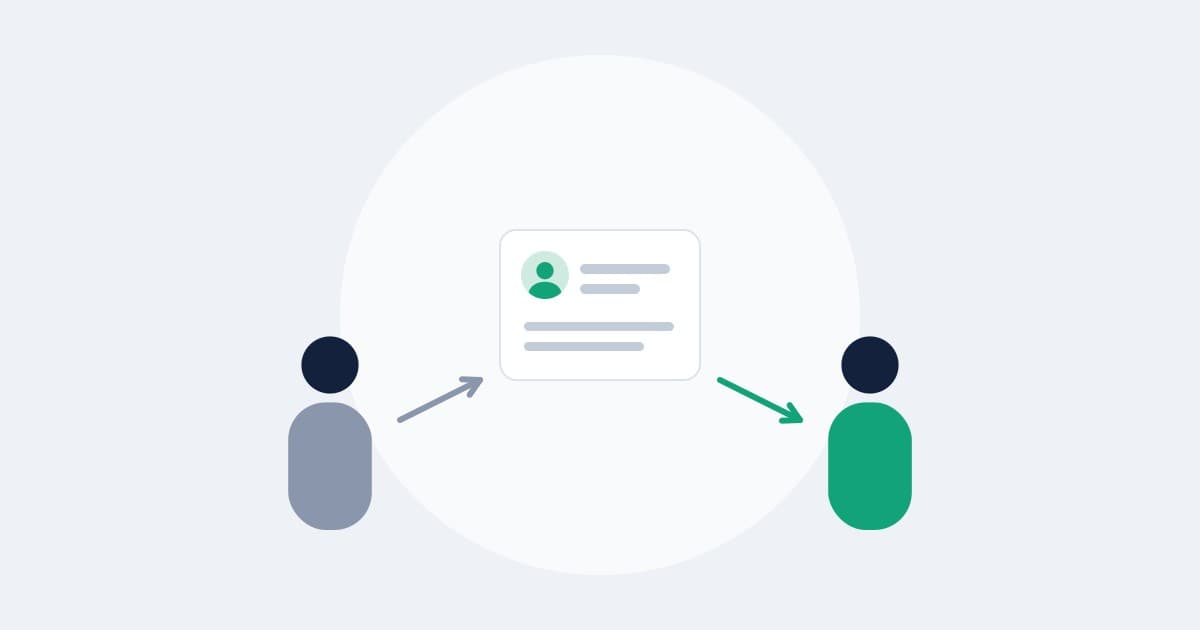
A customer always notices a handover. The only question is whether they notice because someone introduced themselves properly, or because they had to tell their story again.
The second is the real risk, and it doesn't happen because your colleague listens badly. It happens because half of what you know about that customer is written down nowhere. It's in your head: that they'd rather be rung than emailed, that their business partner makes the decision, that something went wrong with a delivery last year that they still refer to.
The record is most of the work
You don't start a good handover on the day of the handover. It's finished when you've written down every conversation — at which point there's nothing left to hand over but the rest.
That's also the most honest reason to keep up three lines per conversation: not for the reporting, but so that you're replaceable. And being replaceable isn't a threat; it's the difference between a business and a collection of people.
What has to be in there
Before the handover, go through the record once against these five points:
- Who decides, and who you speak to. Often not the same person. This is rarely written anywhere and is the most useful of the lot.
- What's live, with the amount and expected date, and what the next step is.
- What's been agreed on prices and terms. Especially the exceptions: a discount promised once, a payment term that differs from your standard.
- Sensitivities. Something that went wrong once, a subject they're short about. Keep it factual and businesslike — they have the right to ask for a copy of what you hold about them, and you'd have a month to produce it.
- How they want to be approached. Phone or email, and what time of week.
The ten-minute conversation
Forwarding a record isn't a handover. Your colleague will read it, but they won't know what to watch for.
Go through it together and say, for each live deal, what you think is going to happen. That last part is written nowhere and is exactly what you can't put in a field: *"He says it's the price but I think he's waiting on his business partner."*
Let your colleague ask questions. The questions they ask show what's missing from your record — and that's the last chance to fill it in.
The customer hears it from you
This is the part that makes the difference between a smooth handover and a messy one, and it costs one phone call.
Ring them yourself, before the handover. Say who's taking over, why, and that you've been through the record so they won't have to explain anything again. That last bit is what reassures them.
A customer who finds out by email, or works it out because someone else suddenly rings, starts at a disadvantage. And a customer who isn't told at all but notices anyway starts out suspicious.
Actually change the owner
Practical, and still forgotten: change the owner of the company, the deals *and* the open tasks to your colleague.
Leave them in your name and they turn up in your day view and not in theirs. Then nobody does them — not you, because you handed them over; not them, because they can't see them. That's precisely the quiet way a deal disappears. See the piece on deals that stall.
Sources
- A guide to subject access — Information Commissioner's Office
- Management practices and the adoption of technology and artificial intelligence in UK firms: 2023 — Office for National Statistics