Your data
Getting your data out, and why it matters
What you should be able to export, how to test it before you buy, and why an annual export is sensible even if you're staying.
About 6 minutes to read
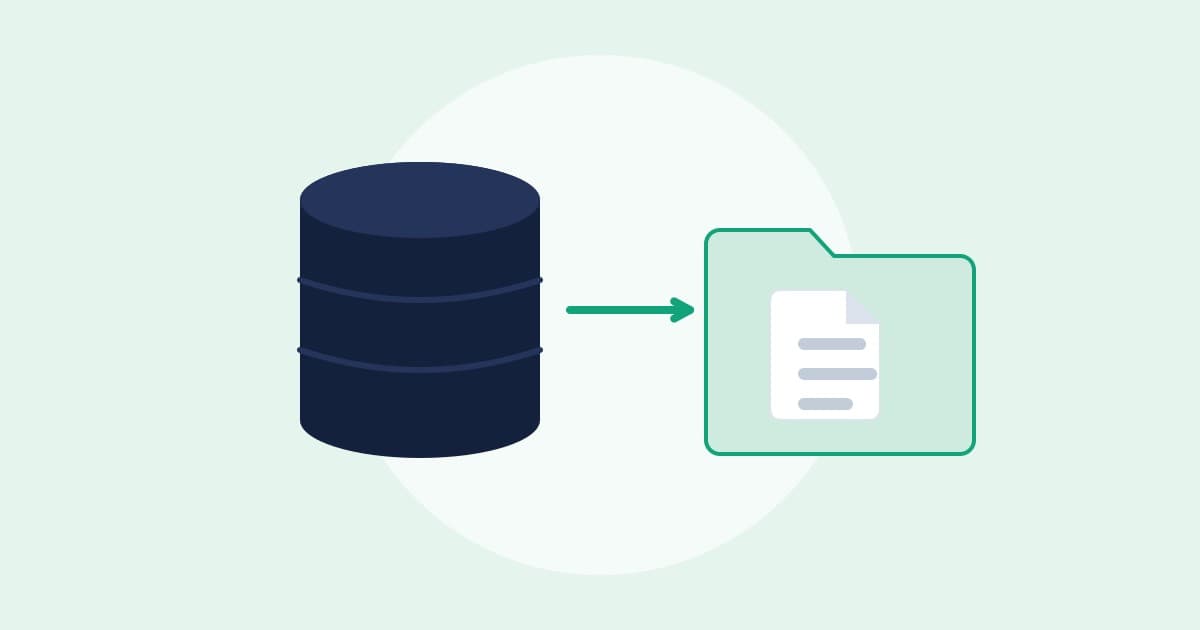
The question you ask beforehand
Choosing software is all about what you can do with it. Almost nobody asks what happens if they want to stop — and that's precisely the moment at which you have no negotiating position left.
Ask before you sign, and keep asking. Not "can I export" — everyone says yes to that. But: export *what*, in which format, can I do it myself, and does it cost anything?
What a full export contains
An export of just companies and contacts is an address list. You already had one of those. What matters is the layer underneath:
- Companies and contacts, with every field you filled in.
- Deals, with amount, stage, owner and the reason you lost them.
- Tasks, open and completed.
- Notes and history. This is the most important and the most often missing. Your conversation notes are the only thing in your CRM you can't find somewhere else.
An export without the notes is a photo album with no photographs in it: the structure is right and the content has gone.
How to test it before you buy
Do this during your trial, while you're not committed to anything. It takes ten minutes.
Put five companies in with a note and a deal each. Export. Open the file. Are the notes in there? Does it say who wrote them and when? Can you open it in Excel without the accented letters and the pound sign turning into strange characters?
What you see there is what you'll get in three years' time. If you have to raise a support request to get an export, you now know that too — and that's an answer in itself.
Why this is also a UK GDPR matter
A customer can ask what information you hold about them, ask you to correct it, and ask you to delete it. You're responsible for answering, even when someone else supplies the software — and for a subject access request you have one month, extendable by two only where the request is complex.
There's a second right that bears directly on exports: data portability. Where you process someone's data by automated means on the basis of consent or a contract, they can ask for it in a structured, commonly used, machine-readable form. A supplier who can't produce a file makes that impossible for you.
So if you can't reach your own data, the absence of an export isn't an inconvenience — it's a compliance problem that sits with you, not with them. More in the piece on customer data and UK GDPR.
Export even if you're staying
Once a year, and put the file somewhere you'll find it again. That isn't distrust, it's the same principle as a backup.
Three things it protects against. A supplier who closes or gets taken over. An outage that lasts longer than you can work around. And an unpaid invoice while you're on holiday, after which your account locks.
It's five minutes a year and it removes a whole category of dependence. It also happens to help with the record-keeping you're obliged to do anyway: HMRC expects five years after the 31 January deadline if you're self-employed, six years from the end of the financial year if you're a limited company, and an export you can actually open is part of being able to meet that.
An honest note
This piece is written by a CRM supplier, and the advice amounts to: make sure you can leave. That isn't generosity, it's the only defensible position.
A supplier who makes leaving difficult is telling you something about how they expect to keep customers. A company that has to win you over every month tries harder than a company that knows you can't go anywhere. That's an argument you're entitled to use with every supplier, including us.
Sources
- A guide to subject access — Information Commissioner's Office
- Right to data portability — Information Commissioner's Office
- Business records if you're self-employed: how long to keep your records — HM Revenue & Customs, GOV.UK
- Running a limited company: company and accounting records — GOV.UK