Follow-up
Following up without becoming a nuisance
Why most revenue is lost to forgotten follow-up, and what rhythm works for each kind of relationship.
About 6 minutes to read
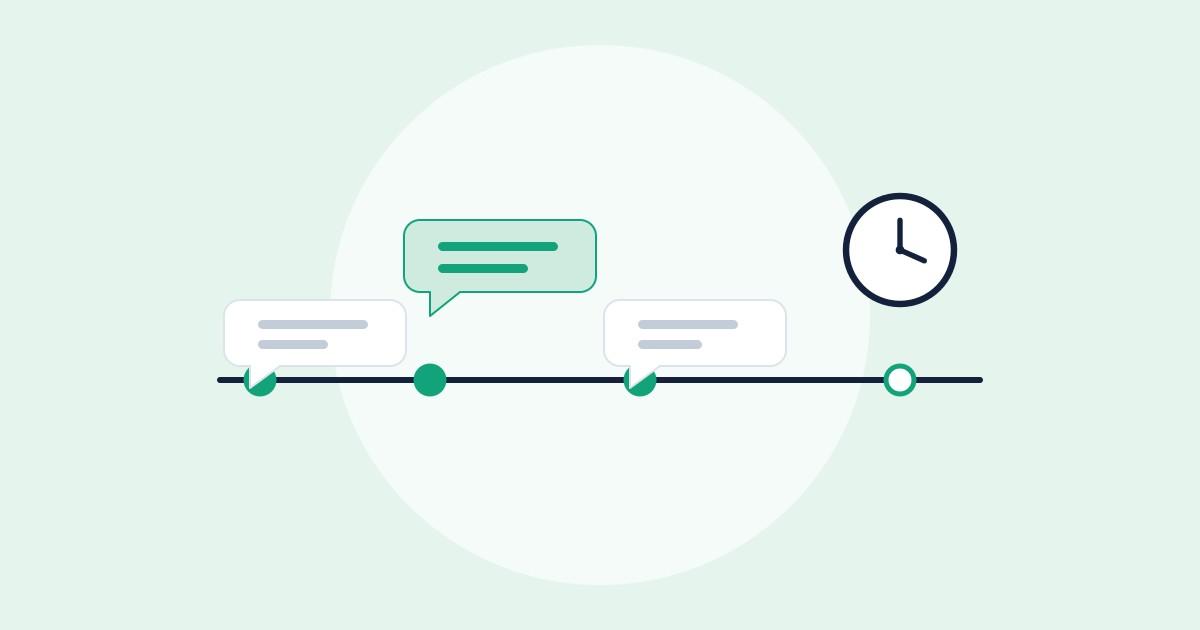
Where the revenue goes
Ask a business owner why they didn't get a job and the answer is usually the price or the competition. Then look at what actually happened, and surprisingly often it's something else: nothing was ever heard again. The quote went out, the customer said they'd discuss it internally, and that was that. Not because they said no, but because nobody picked it back up.
That's good news, because it's the easiest problem there is to fix. You don't need to get better at selling, drop a price or buy advertising. You need to come back on the day you said you would.
The rule: every conversation ends with an arrangement
Not "I'll send something over and I'll hear from you". That isn't a next step, it's a hope. A conversation ends with something you can write down: who does what, and when do we speak again?
The good part is that you can simply ask. "I'll send it Friday — does it suit if I give you a ring the Tuesday after?" Almost nobody minds, and it changes the nature of your follow-up: you aren't ringing unprompted, you're ringing as agreed. That is exactly the difference between a nuisance and someone reliable.
Write the arrangement down straight away, with a date. An arrangement that lives only in your head doesn't exist in ten days' time — not through carelessness, but because forty other things happen in those ten days.
A rhythm for each kind of relationship
Follow-up isn't one size fits all. Broadly there are four kinds of relationship, and they want a different pace.
- A live enquiry. Days, not weeks. Someone who needs something now is comparing now. Reply after a week and the decision has already been made.
- A quote that's out. On the day you agreed, and after that at a slowing pace: a week, two weeks, a month. Each time with a reason to ring that came out of the conversation itself.
- An existing customer. Once a quarter is enough for most service businesses, and that call isn't about selling but about how things are going. This is the category most often skipped and the one that returns the most.
- A cold contact who didn't buy now. Two or three times a year, with something they can use. Ring here every month and you'll be ignored; never ring again and you don't exist.
What to say when you come back
The biggest difference between a follow-up that works and one that irritates is in the first sentence. "Just checking whether you're still interested" puts the work on them and gives them nothing. "You were waiting on the planning permission — has that come through?" shows you listened, and gives them an easy answer.
For that you need your notes, and specifically the substantive ones. Not "rang, no answer", but what they wanted, what's in their way and when their deadline is. Three lines per conversation is enough; it's precisely those three lines that let you start a normal conversation four months later.
Dare to ask for a no
A pipeline full of "not decided yet" isn't optimistic, it's unclear. After a few rounds without progress you're allowed to simply ask: "If this isn't going ahead that's absolutely fine, I'll take it off my list. Just say."
That feels counter-intuitive, and it gets you two things. Sometimes a yes arrives that would otherwise have sat there another six months. And sometimes a clear no arrives, and then you have the reason — information you can use on the next enquiry. A no with a reason is worth more than a maybe without one.
Record that reason too. After ten of them you can see whether you're consistently too expensive, consistently too late, or consistently talking to the wrong people. That's the only kind of sales analysis you can do without a dashboard.
Spotting the ones that have stopped
Set aside one slot a week — a quarter of an hour is enough — where you ask one question: where has nothing happened for more than two weeks? That's the only routine check you genuinely need, and it finds the deals you'd otherwise lose quietly.
If there's more than one of you, do it together and without blame. The aim isn't to work out who let something slide, but to stop an opportunity disappearing because two people each thought the other had it.
When to stop
Follow-up becomes a nuisance at the point where you've stopped bringing anything new. Coming back three times with a reason is normal; asking the same question a sixth time isn't persistence, it's a pest. Move that contact back to the slow rhythm of twice a year rather than dropping them entirely — the situation at their end changes more often than you'd think.
This is what Nermio is built for: every conversation gets a task with a date, and in the morning one screen shows what's due today and which deals have stopped moving. A lost deal asks for a reason, so that ten reasons mean something later on.
Sources
- Business population estimates for the UK and regions 2025 — Department for Business and Trade, GOV.UK
- Management practices and the adoption of technology and artificial intelligence in UK firms: 2023 — Office for National Statistics